

BSNR connects India's smallholder rubber farmers, dealers, processors, manufacturers and exporters on one shared system for EUDR compliance and sustainability certification, at zero cost to farmers.
Learn How BSNR WorksWhen the EU Deforestation Regulation came into force, it placed a new infrastructure and compliance cost on the entire rubber value chain, a cost that smallholder farmers were least equipped to carry on their own. Rather than let that burden fall on individual farmers and small businesses, the Rubber Board of India, along with TRST01, launched Bharat Sustainable Natural Rubber (BSNR) to safeguard the industry with one coordinated national platform.
"When I first heard about the new EUDR regulation, I felt a deep fear. I have always farmed legally in a non-deforested area, yet the thought of losing access to markets because of documents and technology I had never seen before was overwhelming. The BSNR initiative has come as a relief, giving us the confidence that even a smallholder farmer like me can meet the global requirements." Padmanabhan, natural rubber smallholder farmer, Ernakulam district, Kerala
The partnership was deliberate in its design: a single system and standard for the whole industry instead of fragmented, company-led compliance, data held centrally under the Rubber Board with stakeholder identities protected through unique BSNR IDs, and a platform built for first-time digital users rather than large enterprises alone.
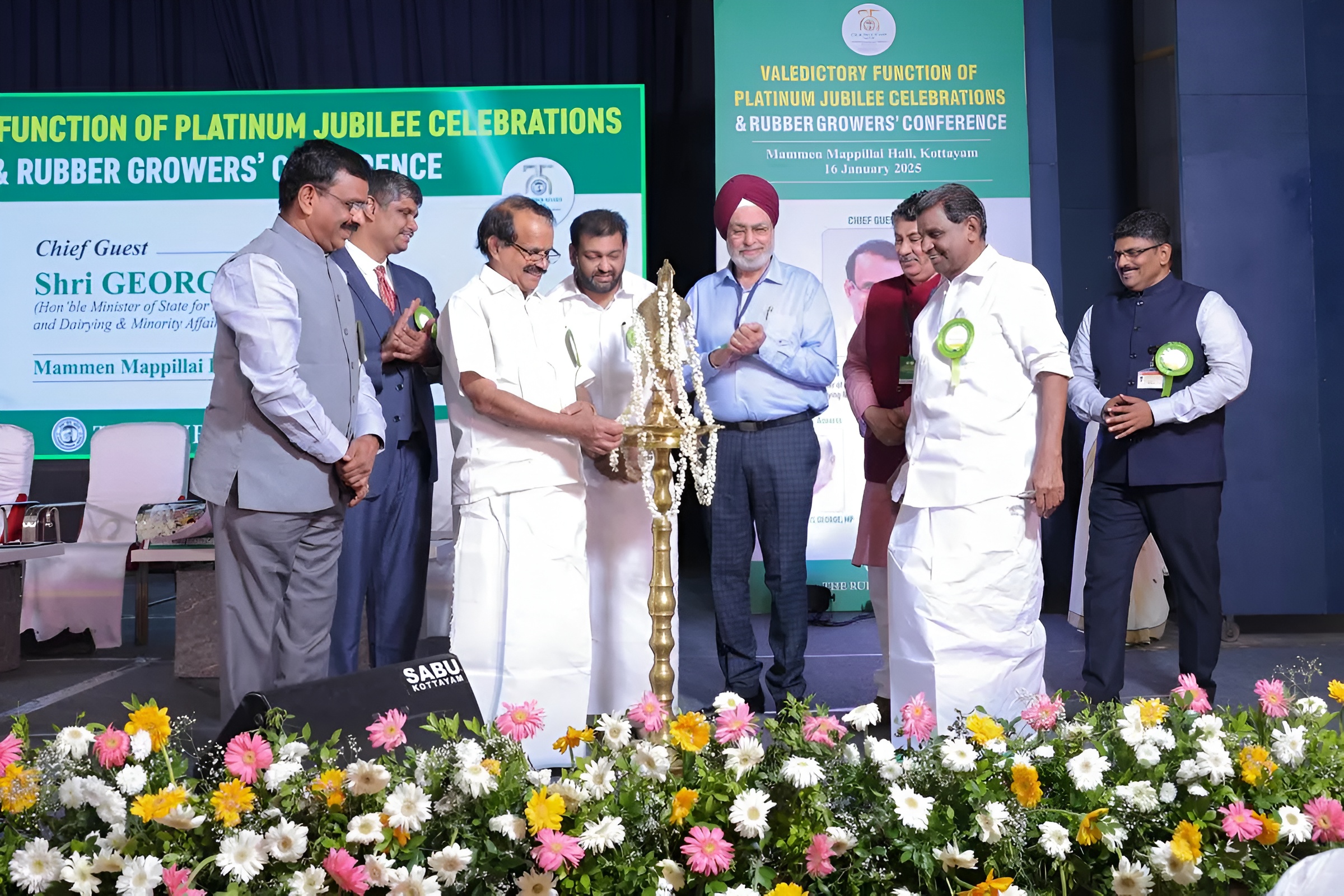
BSNR's momentum earned national endorsement when the Ministry of Commerce and Industry, Government of India, designated the Rubber Board as the nodal agency for EUDR compliance for rubber, making BSNR the country's official, nation-level answer to the regulation.
BSNR is developed and operated in partnership between the Rubber Board of India and TRST01, which serves as the platform's technology and implementation partner, from field data collection and satellite verification to the digital infrastructure that generates each Due Diligence Statement.
Founded in 2019 and headquartered in Hyderabad, India, with a global presence spanning Singapore, Australia and the United States, TRST01 is a sustainable technology company specialising in supply chain transparency, ESG management and regulatory compliance. Its guiding principle, "Trust through Technology", drives a mission to help businesses and governments adopt sustainable, ethical and climate-conscious practices across their supply chains.
TRST01 now operates in more than 10 countries, working with 200 or more corporate and government adoptions, and has brought more than 1.4 million hectares of land under traceability and over 779,000 farmers onboarded across its programmes worldwide, of which BSNR forms a significant part. The company's work has been recognised with honours including the Sustainability Impact Award 2024, a place in the Forbes India D-Globalist Select200, and the Aegis Graham Bell Award 2025.
Beyond rubber, TRST01 supports EUDR compliance work across commodities including coffee, cocoa and palm oil, and its broader product suite extends into carbon market infrastructure and ESG reporting, reflecting a wider mission of building traceable, deforestation-free supply chains as similar regulations emerge in other major markets.
TRST01's EUDR products span the supply chain: TRST01Chain for plot mapping and Due Diligence Statement generation at the exporter and processor level, TRST01Chain MeeS for vendor compliance and internal traceability at the manufacturer level, and the TRST01Chain EUDR Hub for supplier onboarding and Due Diligence Statement filing on the EU importer side.
BSNR, Bharat Sustainable Natural Rubber, is India's national digital platform for EUDR compliance and sustainability certification in the natural rubber sector, connecting farmers, dealers, processors, manufacturers and exporters on one shared system.
BSNR is a partnership between the Rubber Board of India and TRST01, which serves as the programme's technology and implementation partner, covering field data collection, satellite verification and digital compliance filing.
No. Registration, plot mapping, risk assessment and documentation are free for every farmer on the platform.
Every plot record passes through independent field validation and satellite-based deforestation analysis against the EUDR's 31 December 2020 baseline before it is used in any shipment's compliance documentation.
Trained field agents visit farmers directly to complete registration, consent and plot boundary mapping. The process works fully offline in areas without connectivity and does not require the farmer to install anything.
BSNR is being rolled out across India's rubber-growing states, with mapping and onboarding conducted in phases starting with the major rubber-producing regions of Kerala before expanding nationally.
TRST01 is a global EUDR compliance software and services provider, used by more than 200 businesses and governments across more than 10 countries to manage supply chain traceability, deforestation risk assessment and regulatory reporting.
TRST01 offers TRST01Chain for exporters and processors, TRST01Chain MeeS for manufacturers, and the TRST01Chain EUDR Hub for EU importers, covering plot mapping, vendor compliance and Due Diligence Statement filing across the supply chain.
Yes. Beyond natural rubber, TRST01 supports EUDR compliance work across commodities including coffee, cocoa and palm oil, alongside its wider ESG and carbon market infrastructure products.
TRST01 was founded in 2019 and is headquartered in Hyderabad, India, with a global presence spanning Singapore, Australia and the United States, and operations in more than 10 countries.
EUDR compliance software helps businesses meet the requirements of the EU Deforestation Regulation, including geo-polygon mapping of farms and plots, deforestation risk screening, supplier and transaction traceability, and generating and filing Due Diligence Statements with the EU Information System.
A Due Diligence Statement is the legally binding declaration an operator or trader submits to the EU Information System for each shipment, confirming that the goods are deforestation free and legally produced, without which the shipment cannot clear EU customs.